


The coffee market is changing rapidly. Guests today expect more than just a good cappuccino or...
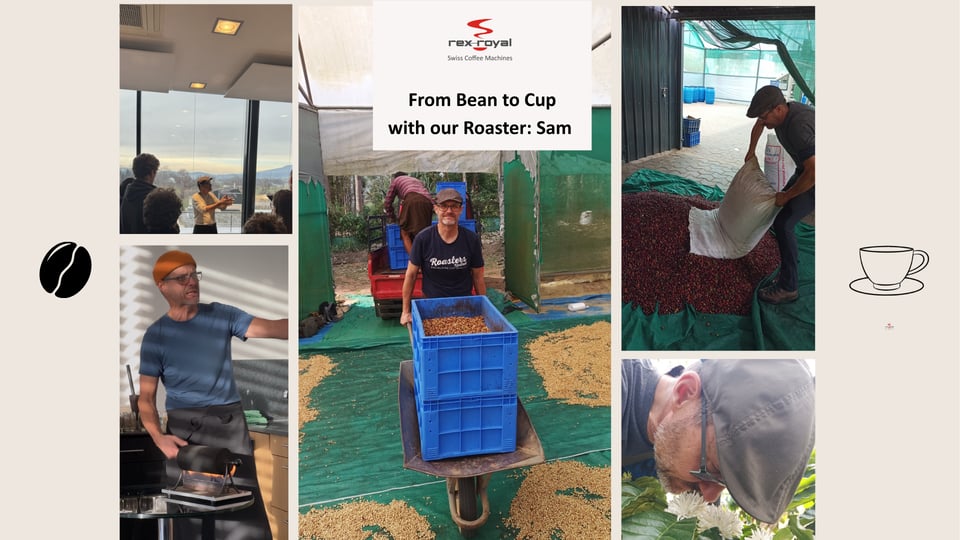
In the first part of our “From Bean to Cup” series, we met Sam. While he manages our website at Rex-Royal, he also has a great passion: coffee. As a roaster with his own roastery, he not only wants to work with exceptional organic coffee, but also to know exactly where every bean comes from and under what conditions it’s produced.
Today, Sam maintains close relationships with smallholder farmers and cooperatives in various countries of origin. For him, one thing is certain: high-quality coffee begins long before roasting. Only when producers are fairly compensated—and can therefore use sustainable farming methods—can consistently top-quality coffee be produced over the long term.
Smallholder Coffee from India: More Than Just Plantations
Anyone who thinks of endless plantations when it comes to coffee will be surprised by southern India. In regions like Kerala, coffee plants often grow in what are known as “forest gardens.” Amid mango, banana, pepper, turmeric, and ginger, the coffee bushes thrive in the natural shade of larger trees.
This cultivation method resembles permaculture and offers numerous benefits:
- natural pest control thanks to high biodiversity
- no use of chemicals
- Healthy soils thanks to natural nutrient cycles
- Additional sources of income through the cultivation of spices and fruits
The downside: Almost all work is done by hand. Many families farm only about one hectare of land. Harvesting, sorting, and processing are done largely without machines.
The traditional process: Coffee in front of one’s own home
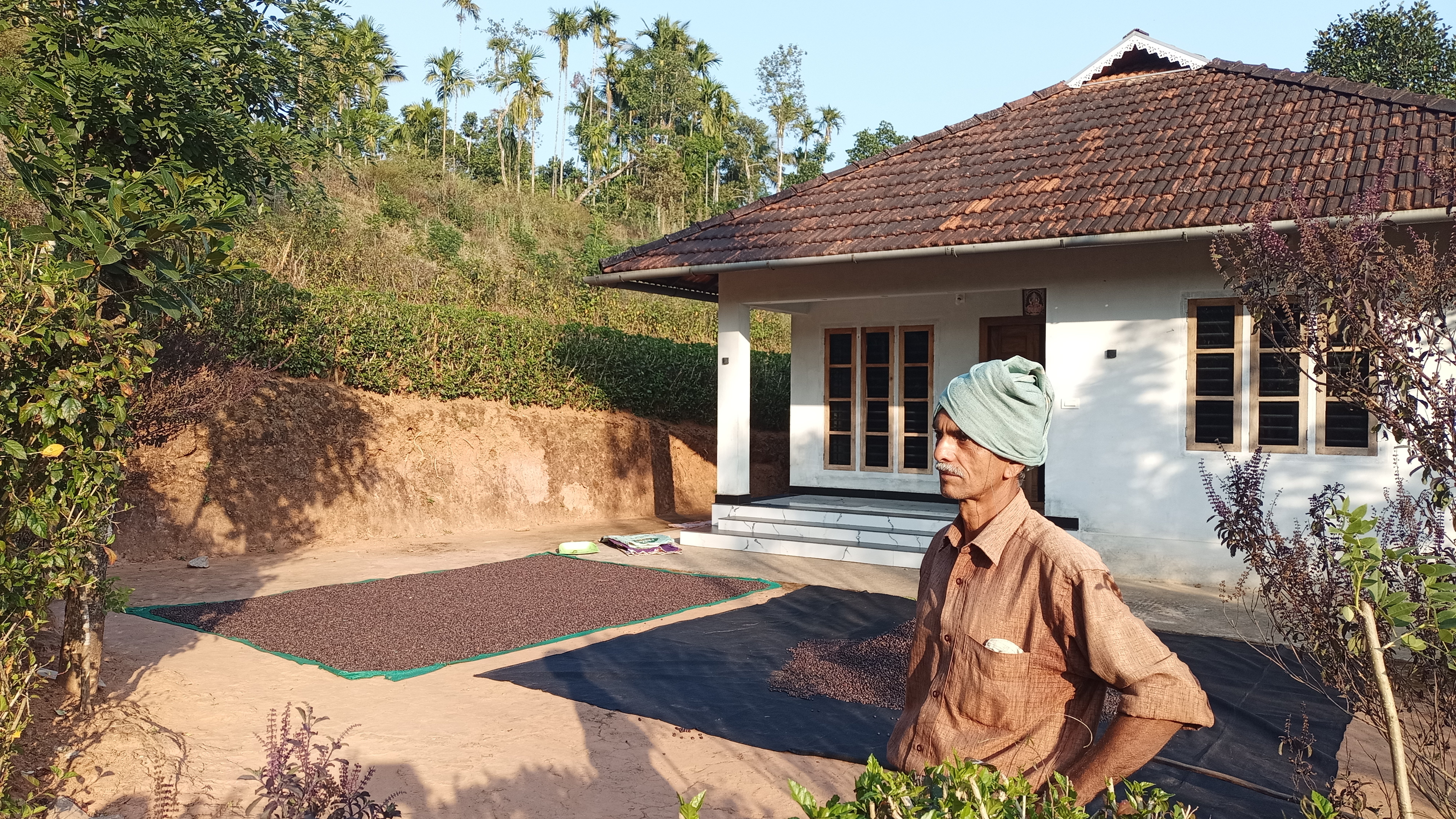
Traditionally, the entire coffee processing takes place directly on the farms. Early in the morning, the ripe coffee cherries are harvested by hand and then spread out in front of the family home. There, the families carefully sort out damaged and unripe coffee cherries as well as foreign objects.
Now begins a process that is crucial to quality: drying. The coffee cherries are spread out on floors, roofs, or simple wooden racks and turned constantly over several days. This is often done by hand—using the feet—or with simple wooden rakes.
Why go to all this trouble?
The pulp of the coffee cherry contains a lot of sugar and moisture. If the cherries are left lying around for too long, yeasts and microorganisms immediately begin the fermentation process. Without regular turning, there is a risk of mold growth and significant loss of quality.
The modern process: precision through machinery
Today, 250 smallholder farmers have joined together to form a cooperative called “Organic Wayanad” to process their organic coffee collectively at a modern processing facility. The coffee cherries are still picked by hand and then transported to the cooperative by tuk-tuk. There, a highly precise processing operation begins.
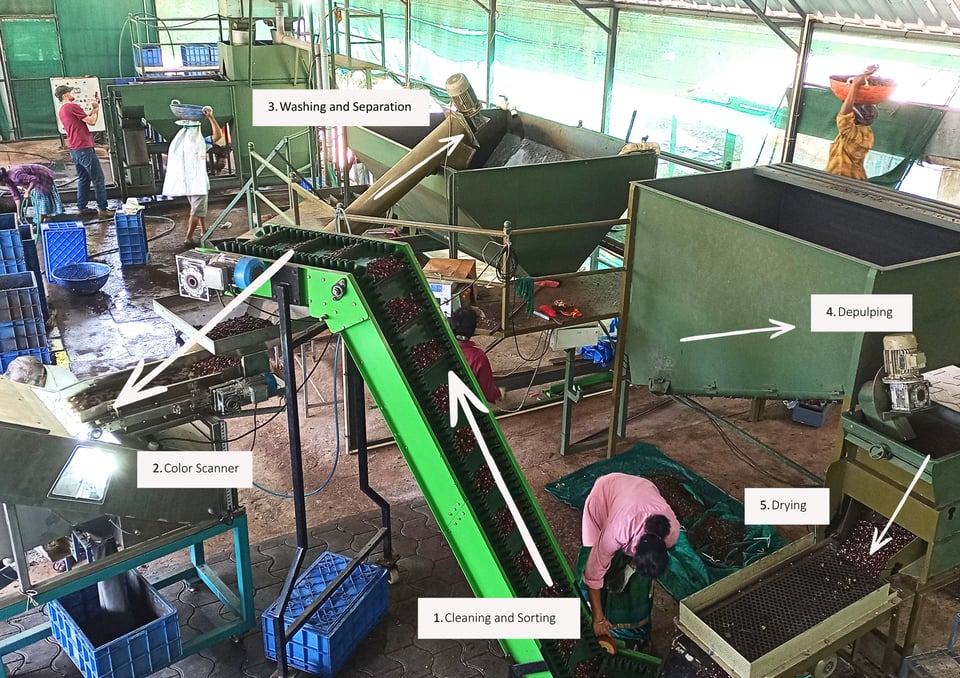
1. Cleaning and Sorting
Leaves, stones, and twigs are sorted out by machine. Conveyor belts and air currents efficiently separate out foreign matter.
2. Color Scanner
An important step in quality control is the optical color sorter. Within milliseconds, the system identifies ripe and unripe coffee cherries. Defective fruits are removed using targeted bursts of air. The system can process up to 600 kilograms of coffee per hour. What used to require many hours of manual labor is now done virtually error-free in just a few minutes.
3. Washing and Separation
The cherries are then placed in a water bath. Ripe fruits sink to the bottom, while damaged or overripe cherries float to the surface and are removed.
4. Depulping
In the next step, the pulp is removed by machine. What remains is the actual coffee bean, which is still surrounded by its parchment layer.
5. Drying
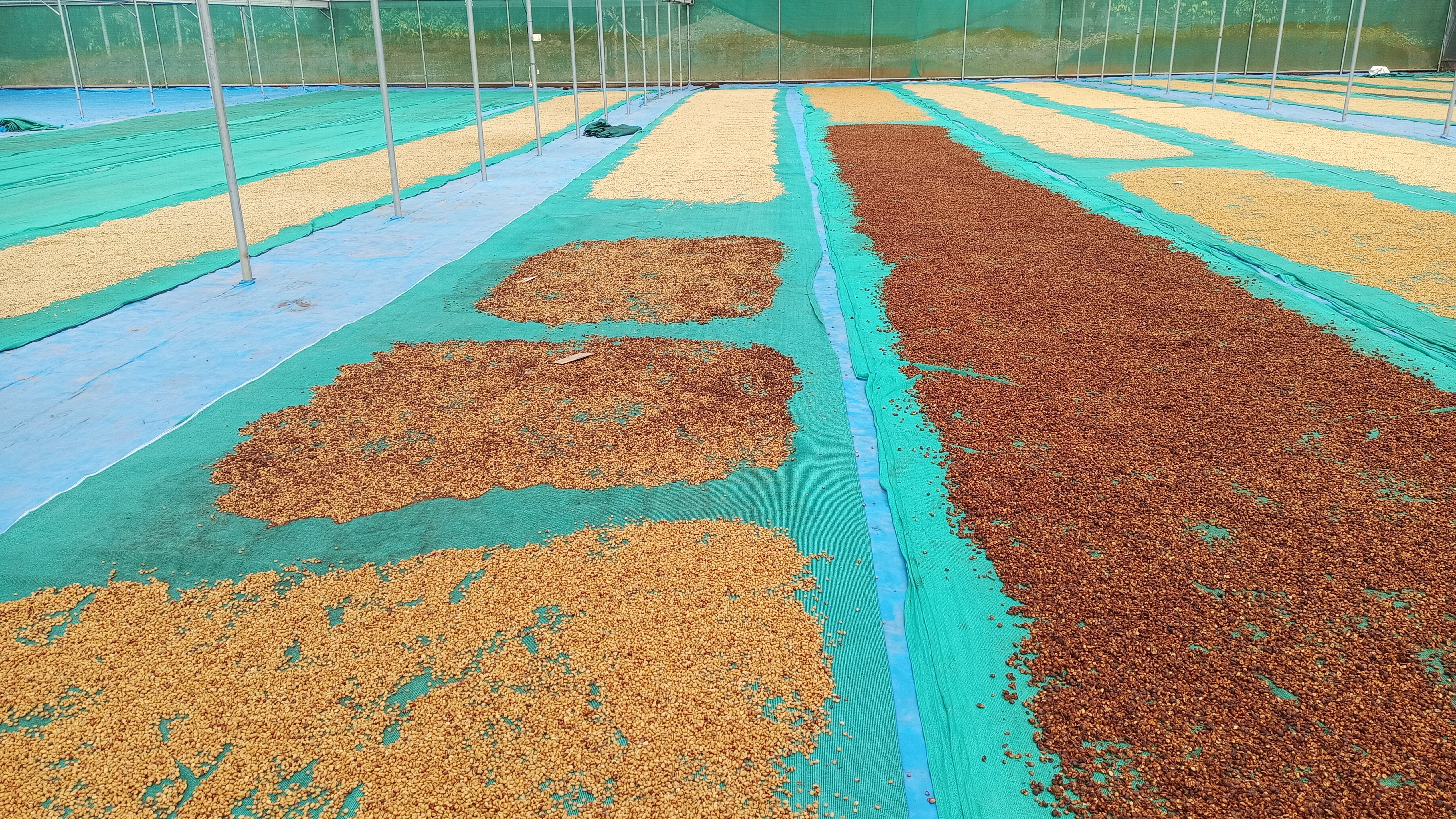
Finally, the beans are dried for ten to fourteen days in sheltered drying facilities. A roof protects them from rain and excessive sunlight, while good air circulation ensures even drying. Here, too, the cherries must be turned several times a day so that they dry evenly and unwanted fermentation does not occur.
From light to dark: The different roast levels
Different aromas develop depending on the roasting time.
Light roast: The bean remains lighter in color and brings out the fruity and floral notes of its origin particularly well.
Medium roast: This creates a balanced ratio of acidity, sweetness, and roasted flavors. This roast is suitable for many coffee preparations.
Dark Roast: A longer roasting time produces bold roasted flavors with notes of chocolate, nuts, or caramel. The original fruitiness recedes more into the background.
For Sam, direct interaction with local people is an important part of his work. After all, high-quality coffee begins in the country of origin—long before the beans are roasted or brewed in a coffee maker.
Years of experience and modern technology complement each other perfectly in this process. Through collaboration with the “Organic Wayanad” cooperative, targeted investments were made in modern infrastructure, such as color sorters and drying facilities. Sponsors such as Rex-Royal AG also contributed to these investments. This improves the quality of the coffee and provides sustainable support to the producers.
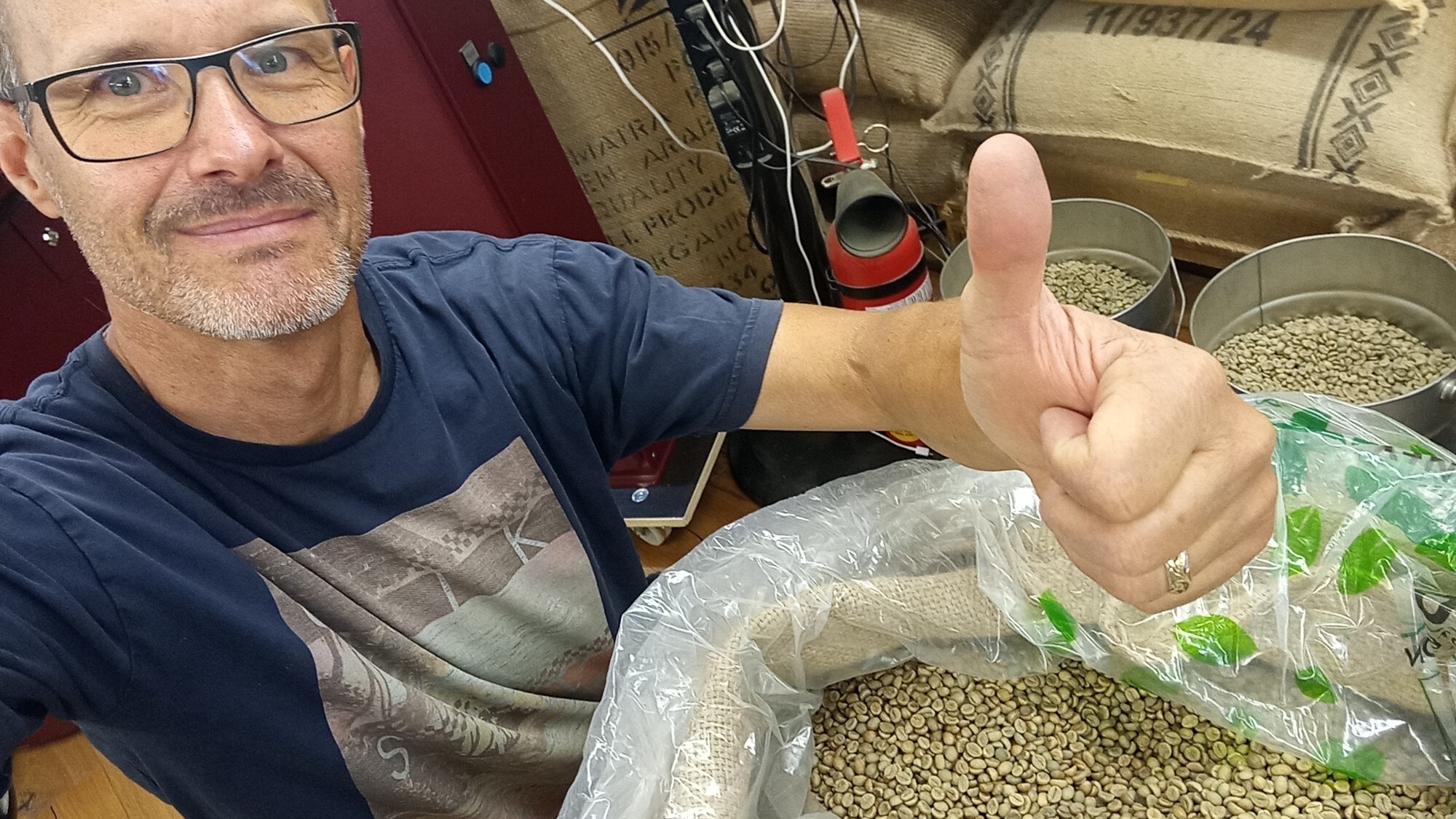
When the coffee arrives at Sam’s roastery, “Röstgrad,” in Switzerland about six months after harvest, Sam is overjoyed, and a fascinating journey of aromatic discovery begins. After all, coffee is a natural product influenced by environmental conditions and the ecosystem. Companion crops and farming methods also influence the coffee. So every year, there’s something new for Sam to discover.

Interessiert an unseren Produkten?
Lassen Sie uns wissen, wie wir helfen können!
Senden Sie uns eine Nachricht und wir werden uns bei Ihnen melden.